Cart
0

Before an object reaches a shelf, a wardrobe or a doorstep in Britain, it has already travelled a long way.
Not only geographically, but through a chain of knowledge: materials selected, patterns developed, tools
prepared, hands practised and techniques passed from one maker to another.
That journey is part of what interests us at Ignis & Iris.
Our starting point is India, a country with an extraordinary variety of craft traditions. Across different regions
and communities, makers work with textiles, wood, metal, leather, fibre, clay and other natural materials,
using processes shaped by local history and generations of experience.
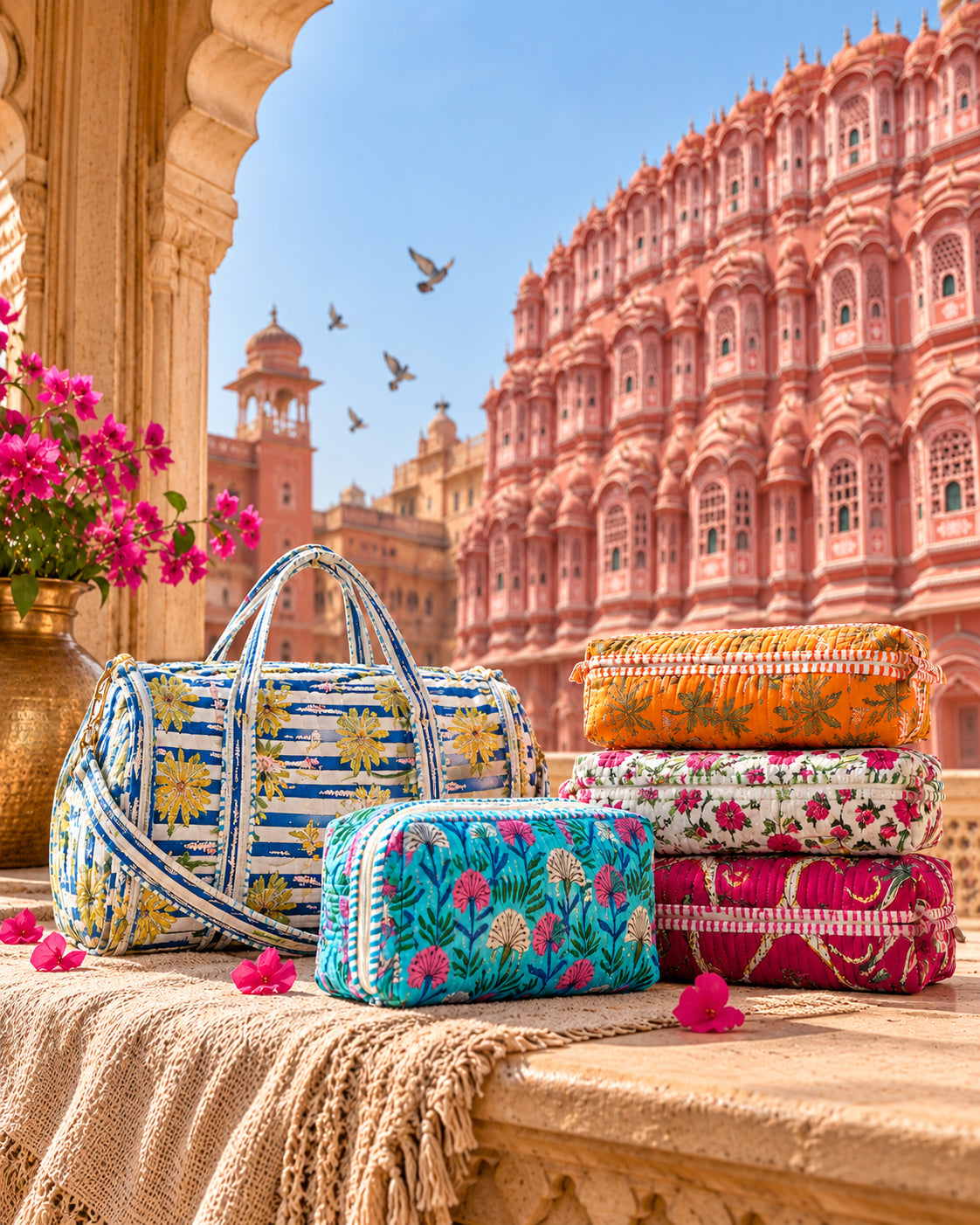
Jaipur and Rajasthan are an important part of our early story. The region is closely associated with distinctive
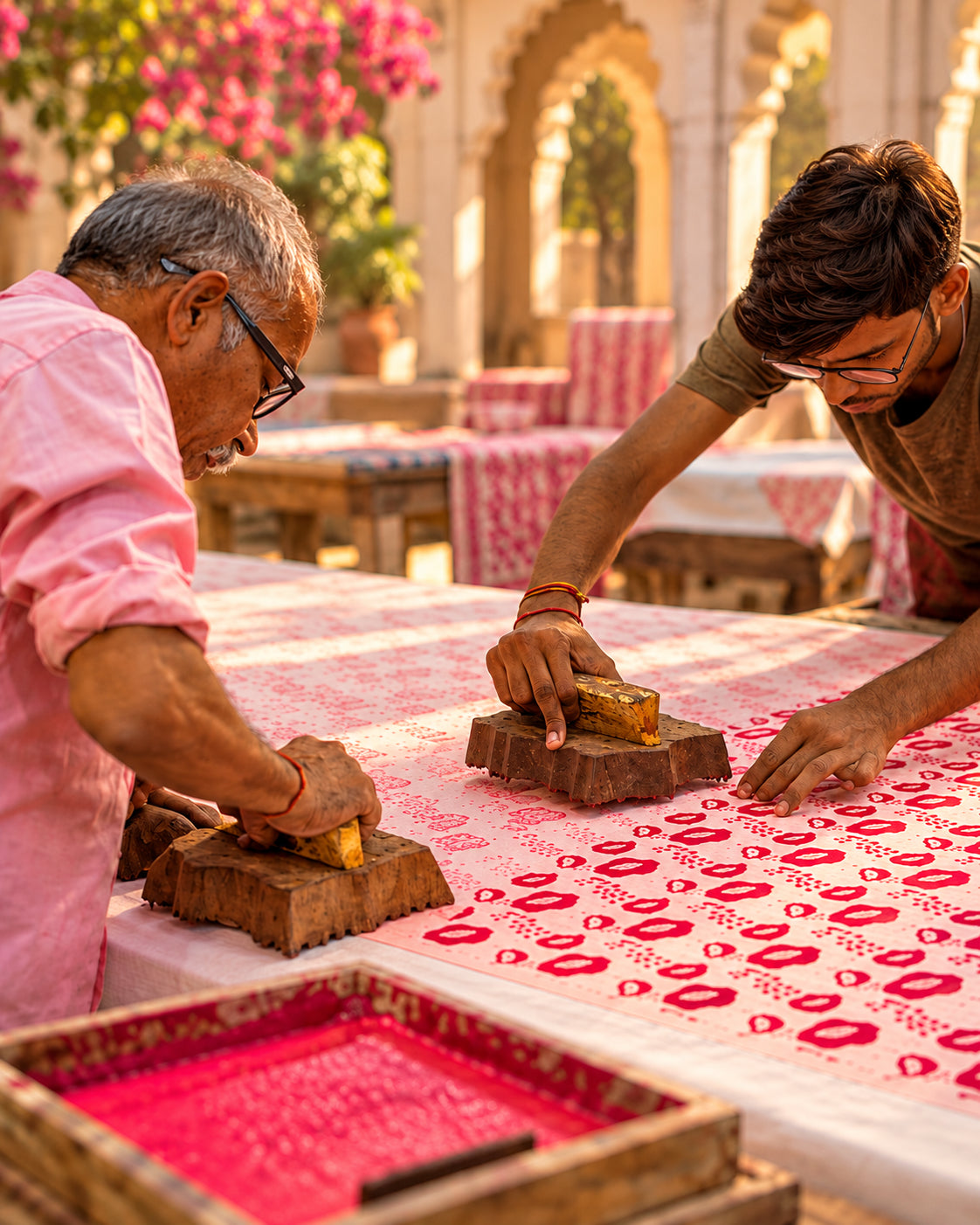
textile and decorative traditions, including hand block printing. In this process, a design is carved into a
wooden block, colour is applied and the block is pressed onto fabric by hand. The process is repeated,
carefully building a pattern across the material.
It is a deceptively simple description of a process that requires patience and skill.
Handmade also means that uniformity is not always the point. Small differences in print placement, colour,
texture or finish can occur naturally when an object is made by hand. To us, these details are not something to erase. They are part of the provenance of the piece — a reminder that it has passed through human hands.
This is why we want to tell the story behind our objects rather than simply describing what they look like.
Where was something made? What material was used? Which technique shaped it? What should a customer
expect from a handmade finish?
As Ignis & Iris develops, we intend to explore more crafts and makers from across India. That may take us
beyond textiles and beyond Rajasthan, into other materials, regions and forms of making.
The common thread will remain provenance.
We want the journey from maker to customer to feel visible. Not as a marketing device, but because knowing
where something comes from changes the way we see it.
A handmade object carries more than its finished form. It carries time, skill, material and a little evidence of
the hands that made it.